

Rescue dogs come from a variety of backgrounds, and many carry emotional scars from past traumas or neglect. One of the most common challenges that rescue dogs face is overcoming fear—whether it’s fear of new environments, strangers, or being confined in a crate. While crating can be a helpful tool for providing security and structure, it’s important to approach it carefully and with consideration to the dog’s emotional state.
Fear-based behaviors in rescue dogs are often deeply ingrained, but with patience and proper training, these dogs can learn to feel safe and secure in a crate. Let’s explore how safe crating techniques can help rescue dogs overcome their fear and learn to trust their new environment.
Understanding Fear in Rescue Dogs
Before addressing how to crate a fearful rescue dog, it’s essential to understand where the fear comes from. Many rescue dogs have experienced trauma in their previous lives. These experiences could involve neglect, abuse, or abandonment. Dogs that have been confined to small, dirty spaces, or have never been given the opportunity to explore safely, may view crates as a punishment or a form of restriction rather than a safe space.
Fear can manifest in many ways, including trembling, barking, whining, or even trying to escape. Some dogs may exhibit more severe signs of distress, such as drooling, vomiting, or excessive destructive behavior when left in a crate. This response stems from anxiety, and the goal of crating is to shift their association from fear to a feeling of security and safety.
Why Crates Are Important for Rescue Dogs
Crates provide a sense of structure, security, and personal space for dogs. When used properly, a crate becomes a safe retreat for a dog, offering them a place to relax, rest, and feel protected. For rescue dogs, who may be overwhelmed by the unpredictability of their new lives, having a designated safe space can significantly reduce anxiety and fear.
Crating also offers practical benefits. It helps in house training by establishing boundaries and routines. It can keep the dog safe when unsupervised, and it’s a necessary tool for traveling. However, it’s crucial to use crates in a positive, fear-free way to build trust with your rescue dog.
Step-by-Step Guide to Safe Crating for Fearful Rescue Dogs
1. Choose the Right Crate
Choosing the right crate for your rescue dog is the first step in helping them feel safe. Opt for a crate that is the appropriate size—large enough for your dog to stand, turn around, and lie down comfortably but not too large that it feels like an overwhelming, empty space. A crate that’s too large can sometimes feel less secure, causing anxiety.
Impact Dog Crates are a great option, as they offer durable, high-quality crates that provide safety and comfort. These crates are designed to withstand the impact of travel and provide a secure, comfortable environment for your dog to settle in.
2. Introduce the Crate Gradually
It’s important not to rush your rescue dog into the crate, especially if they are fearful. Start by placing the crate in a calm, quiet area where the dog feels safe. Keep the door open and allow them to explore it at their own pace. You can encourage them with treats or their favorite toy to build positive associations with the crate.
Never force your dog into the crate, as this will only reinforce their fear. Let them come and go as they please, slowly becoming accustomed to the crate’s presence in their environment.
3. Create Positive Associations
Positive reinforcement is key to helping your rescue dog overcome their fear of the crate. Use treats, praise, and toys to reward your dog for voluntarily entering the crate. You can even feed them their meals inside the crate, associating it with something enjoyable. Make the crate a positive experience by gradually increasing the amount of time they spend inside, ensuring they feel calm and relaxed.
As your dog becomes more comfortable, begin closing the door for short periods. Start with just a few seconds and gradually increase the time the dog is crated. Always make sure that your dog is calm before attempting to extend crate time.
4. Create a Cozy, Inviting Environment
The interior of the crate should be a cozy, inviting space that makes your dog feel secure. Use soft bedding, such as blankets or towels, to create a comfortable environment. Some dogs may feel more comfortable with the crate covered by a blanket, which helps block out visual stimuli and makes it feel like a den.
Adding familiar scents, like a favorite blanket or an item of clothing with your scent, can help comfort the dog further. The more you can make the crate feel like a safe, homey space, the quicker your dog will settle.
5. Remain Calm and Patient
Building trust with a fearful dog takes time and patience. Your rescue dog may not immediately warm up to the crate, and it’s important not to rush the process. If your dog becomes anxious or shows signs of fear, take a step back and give them time to adjust.
Avoid punishing your dog if they resist or bark in the crate. Instead, try to create an atmosphere of calm and reassurance. Never use the crate as a form of punishment, as this can reinforce negative associations with it.
6. Gradually Increase Crate Time
Once your dog is comfortable with short periods in the crate, begin to increase the time gradually. Start by leaving the dog crated for just a few minutes while you’re in another room. Over time, you can leave them in the crate for longer periods while you step out of sight. This helps them become accustomed to being crated and fosters confidence.
If your dog shows signs of distress during these sessions, it’s important to return to a shorter duration and build back up at their pace. Always use calm, gentle reassurance when they are in the crate, letting them know they are safe.
7. Keep the Crate Positive During Travel
For rescue dogs that are fearful of traveling, a crate can become a comforting and safe place when you’re on the move. The crate helps to contain them securely, reducing anxiety caused by being in a car or airplane. Before trips, it’s a good idea to use the crate for some practice sessions, helping your dog to associate it with positive experiences.
Why an Impact Dog Crate Works for Fearful Dogs
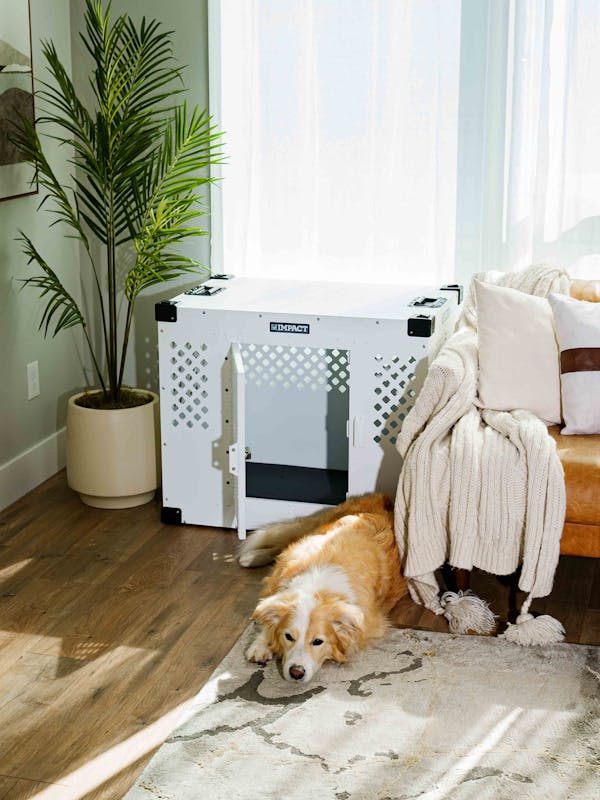
Impact Dog Crates are particularly well-suited for fearful rescue dogs because they are designed with both safety and comfort in mind. The solid construction ensures your dog feels secure and protected during travel or time spent in the crate. The crate’s ventilated design ensures your dog is comfortable and can breathe easily, while the sturdy material prevents escapes or injury, which is especially important for dogs who may have a history of trying to escape when anxious.
The high-quality design also reduces the likelihood of damaging the crate, which is crucial when working with a fearful dog. Rescue dogs can sometimes become destructive when stressed, and Impact Dog Crates are designed to withstand these behaviors, making them a reliable choice.
Conclusion: Helping Your Rescue Dog Find Peace with Crating
Crating can be a powerful tool in helping rescue dogs overcome fear, providing them with a sense of security and personal space. By using gradual, positive reinforcement techniques and choosing the right crate, you can help your dog learn to trust their crate and feel safe. Over time, your dog will learn to associate the crate with calm, comfort, and positive experiences, reducing their fear and anxiety.For a high-quality, durable crate that helps your rescue dog feel safe and secure, visit Impact Dog Crates. Take the first step toward building your rescue dog’s confidence and making their journey to a happy, healthy life easier with a trusted, reliable crate.
 Dog Anxiety Support
Leave a comment