
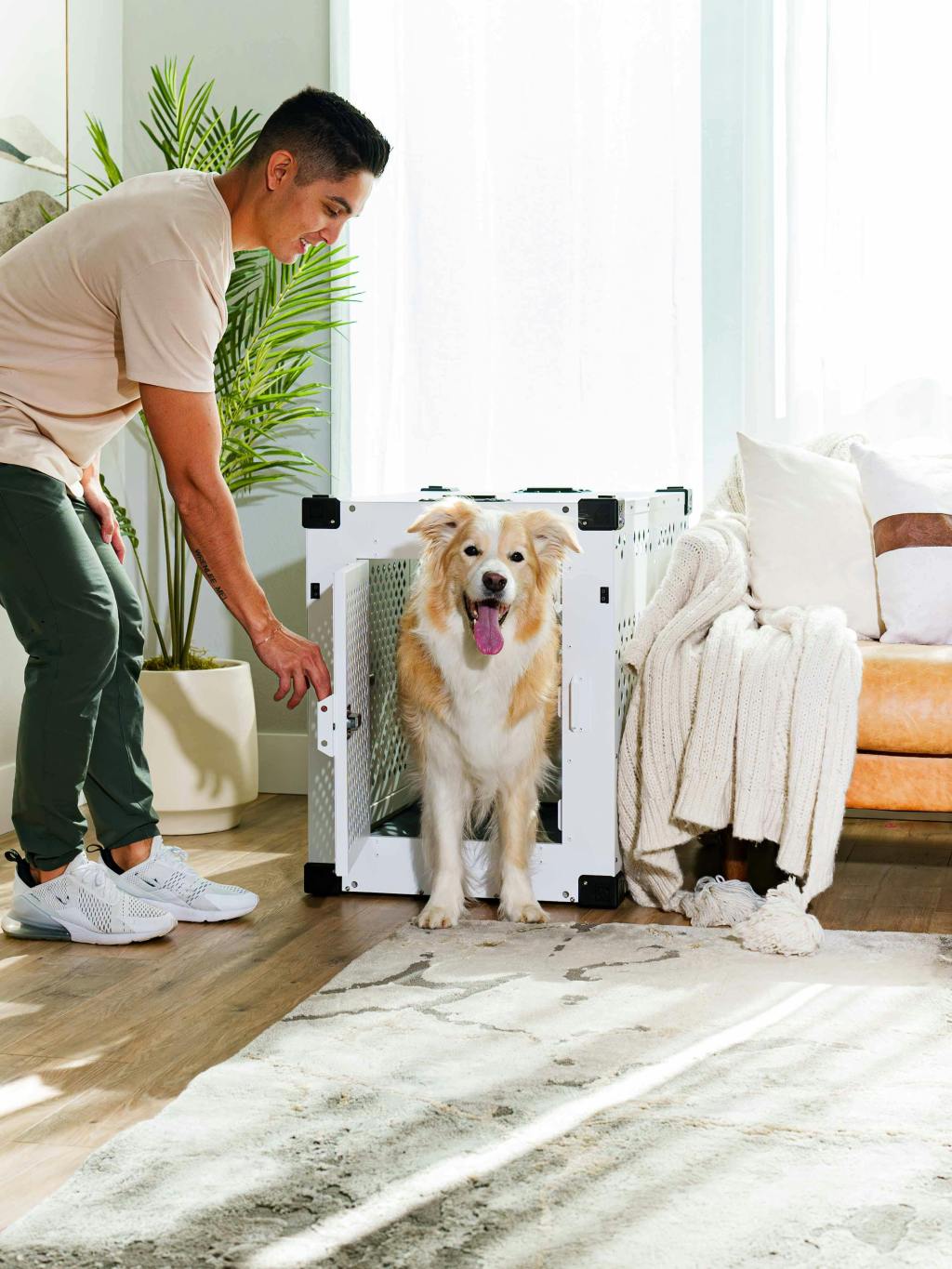
If you’ve ever faced a situation where your dog barks excessively or seems anxious, you’re probably wondering if there’s a way to help them feel calmer and more at ease. Many pet owners struggle with dogs who bark at everything from a passing car to the sound of a doorbell. For some dogs, anxiety is a major concern, often leading to constant barking, destructive behavior, and overall distress.
In these challenging moments, a dog crate can offer a surprisingly simple yet effective solution. Crates are often thought of as a place for dogs to sleep or for travel, but their benefits go far beyond that. When used correctly, a crate can actually help reduce barking and alleviate stress. But how does this work, and why is it so effective? Let’s dive into the science and explore how a crate can be a game-changer for both your dog and you.
Understanding Dog Behavior: Why Do Dogs Bark?
Before we talk about how crates can help, it’s essential to understand why dogs bark in the first place. Barking is a natural form of communication for dogs, but excessive barking can sometimes indicate stress, anxiety, or even a lack of proper stimulation. Common triggers for barking include:
- Separation Anxiety: Many dogs bark excessively when their owners leave them alone. This is often a sign of separation anxiety, where the dog feels unsafe or fearful in their owner’s absence.
- Fear or Stress: Loud noises, unfamiliar people, or changes in the environment can trigger barking as a response to stress or fear.
- Lack of Mental Stimulation: Dogs need mental and physical stimulation. Without enough exercise or interaction, they may resort to barking as a way to cope with boredom.
- Excitement: Some dogs bark simply because they are excited, such as when someone arrives home or when they see a squirrel outside the window.
- Territorial Behavior: Dogs may bark to protect their space, particularly when they sense someone or something encroaching upon it.
Understanding these triggers is the first step toward addressing the issue. With that in mind, how can a crate reduce barking and stress?
The Role of a Crate in Reducing Barking
A crate can provide a sanctuary of peace for a dog, which directly helps in managing stress and reducing unwanted barking. Here are some key ways in which a crate helps your dog manage their behavior:
1. Creating a Safe Space for Your Dog
A crate mimics a den-like environment for dogs, offering them a place of security. According to the American Kennel Club (AKC), dogs are den animals by nature. This means that they instinctively seek out confined, safe spaces where they can rest and retreat from the world around them.
When a dog is placed in their crate, they begin to associate the space with comfort, security, and relaxation. This designated area reduces anxiety by giving them control over their environment. In stressful situations, such as when you’re away or when there are loud noises, the crate provides a calming retreat.
2. Reducing Separation Anxiety
Dogs with separation anxiety often bark excessively when left alone. While the crate won’t magically eliminate anxiety, it can help your dog feel less stressed during your absence. The crate serves as a personal, familiar space, making the transition easier when you need to leave home.
Research supports the idea that confinement in a crate, when used correctly, can significantly reduce anxiety in dogs. A study conducted by the University of Lincoln in the UK found that crate training improved dogs’ ability to cope with separation from their owners, ultimately leading to a reduction in anxiety and barking.
3. Providing Consistency and Routine
Dogs thrive on routine. A crate can be part of a structured routine that helps your dog feel more secure. When a dog knows they have a consistent place to retreat to at certain times of the day, it reduces uncertainty and promotes mental stability.
This structure is particularly helpful for puppies or newly adopted dogs who may feel disoriented in a new environment. With a crate, they know where to go for rest and comfort, leading to less barking and stress.
4. Encouraging Positive Habits
Crate training encourages calm behavior by teaching your dog how to settle down in their space. When you use the crate for positive activities such as sleep, rest, or meal times, your dog learns to associate the crate with relaxation instead of anxiety.
Rather than becoming frustrated with your dog’s barking or anxiety, crate training can redirect their energy into positive habits. Over time, your dog learns that barking and anxiety don’t need to be the response to stimuli; instead, calmness and patience become the go-to behaviors.
5. Minimizing Destructive Behavior
Barking and anxiety can often result in destructive behavior, such as chewing, digging, or excessive pacing. By confining your dog to their crate when you’re not home, you prevent them from engaging in these behaviors. In fact, a well-constructed crate helps keep your dog safe and prevents them from harming themselves or your belongings during moments of stress.
The Science Behind Crates and Stress Reduction
Crates work because they tap into a dog’s natural instincts for safety and security. According to Dr. Karen Overall, a renowned animal behaviorist, dogs feel calmer when they are provided with a safe, enclosed space where they can retreat and relax. This natural tendency to seek out small, enclosed areas aligns perfectly with crate training.
Additionally, the benefits of crate training have been recognized by veterinary professionals. Dr. John Ciribassi, a veterinary behaviorist, has emphasized that crate training is one of the best tools for managing anxiety and excessive barking, especially when combined with other forms of training and behavior modification.
How to Effectively Use a Crate to Reduce Barking & Stress
While crates are incredibly effective, they need to be used correctly to ensure your dog’s well-being. Here are a few tips to maximize the benefits of crate training:
- Introduce the Crate Gradually: Don’t rush the process. Allow your dog to explore the crate at their own pace, ensuring they feel comfortable in their new space.
- Make the Crate a Positive Place: Use treats, toys, and praise to create a positive association with the crate. Never use the crate as a form of punishment.
- Don’t Overuse the Crate: While crates are beneficial, dogs should not be confined for extended periods. Ensure your dog has plenty of exercise and playtime outside the crate.
- Provide Mental Stimulation: To reduce barking, make sure your dog is mentally and physically stimulated. Regular walks, training sessions, and interactive toys can help tire your dog out and reduce unnecessary barking.
Conclusion: A Crate Is a Powerful Tool for Reducing Barking and Stress
The answer to whether a crate can reduce barking and stress is a resounding “yes!” When used properly, a crate provides your dog with a sanctuary of security, reduces anxiety, and minimizes destructive behaviors. The positive impact of crate training is supported by both behavioral experts and veterinarians alike.
If you’re looking for the perfect crate to start your journey towards a calmer, happier dog, consider exploring Impact Dog Crates. Their high-quality crates are designed with comfort, security, and durability in mind. Whether you need a crate for travel, training, or simply as a safe haven for your dog, Impact Dog Crates offers a range of options tailored to meet your needs.Don’t wait! Start providing your dog with the comfort and security they deserve by choosing a top-tier crate from Impact Dog Crates today. Visit Impact Dog Crates and find the perfect fit for your dog’s needs!
 Dog Anxiety Support
Leave a comment